


May 6, 2025, from 9:00a.m. to 10:00p.m., we will be strolling Historic Butler Beach with Megan Wright of the St. Johns County Parks and Rec Department.
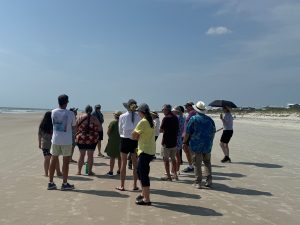
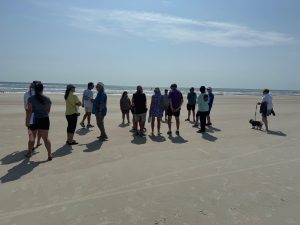
Put your toes in the sand as St. Johns County Parks & Recreation Guide Megan Wright discusses the significance of Historic Butler Beach during the Civil Rights era.
When: May 6
Where: 5860 A1A South (South A1A on Anastasia Island)
Time: 9:00a.m. – 10:00a.m.
Ranger Megan Wright offers a glimpse into African-American history and American race relations in America’s Oldest City on a topic that didn’t happen that long ago!
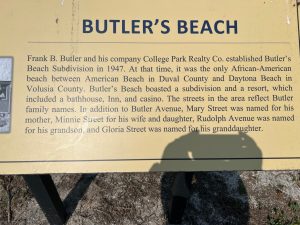
Frank B. Butler named it Butler Beach and opened it to African-Americans. It became the only stretch of beach between Daytona Beach and American Beach, north of Jacksonville, where African-Americans were allowed to enjoy the sand and the sea. Under its namesake’s direction, Butler Beach continued to develop.
History:
- In the early 1900s, Frank B. Butler, a young Black man, moved to St. Augustine and settled in Lincolnville.
- In 1927, Butler purchased oceanfront property on Anastasia Island after becoming frustrated with Florida’s “whites only” beaches.
- In 1964, Butler Beach became a focal point of segregation as St. Augustine became a Civil Rights headline.
Access:
- Visitors can access Butler Beach through Frank B. Butler County Park.
- The Mary Street Beach ramp takes drivers to the beach for a fee.
- Unpaved Gloria Avenue has free parking before the pay station.
Activities: swimming, sunbathing, and biking.
Beach features: Dog friendly, as long as the dog is leashed at all times